© Kirk Feral 2009-present, All Rights Reserved. These materials may be duplicated and shared for educational purposes only. No part of this website may be duplicated or distributed for profit, for commercial purposes, or for posting to another website, without the expressed written consent of the copyright holder.
Readers may post comments or share results of their own magnetic testing in the Comments section.
The author can be contacted via email at: kirk@gemstonemagnetism.com
To read our introduction to magnetism, click on this link: Overview of Magnetism in Gemstones
For a review of some practical uses for a magnetic wand for gem identification, go to: 10 Practical Uses
The intent of this 48-page website is to introduce the magnetic wand to collectors, jewelers, dealers, professional gemologists and researchers, and to demonstrate the extraordinary effectiveness of magnetic testing. The Overview and How To sections of this website can be used as supplemental course material for gem identification classes. Gem ID course instructors may freely share website content copyrighted by this author.
Simple testing with a magnetic wand is an enjoyable qualitative method that can provide immensely valuable information for gem identification, more so than other qualitative measurements such as spectroscope readings or gem fluorescence. Additionally, a more precise method of magnetic testing using a Hoover balance can furnish quantitative measurements of magnetic susceptibility for any gemstone species or variety, and this is discussed throughout our website, with particular emphasis on Garnet identification.
The majority of information presented in this website regarding magnetism in gemstones, including all reference charts and research results, is new material that has not been published elsewhere. This information was developed through our systematic investigation of magnetism in thousands of gemstones held in private collections. Our Magnetic Susceptibility Index, created and expanded since 2009, is the only published index that provides both qualitative response ranges and quantitative magnetic susceptibility ranges for most gemstone species and varieties. All photos in this website, except those noted, were taken by the author.
The concept of using a hand-held magnet as a gem identification tool is not new. Renowned British gemologist Basil Anderson proposed it in 1953. Prior to our own comprehensive studies of gem magnetism that began in 2008, Sylvia Gumpesberger (2006), Don Hoover (2007) and a few other innovative researchers published important preliminary investigations of gem testing using strong rare-earth magnets. But for the most part, the proven value of magnetic testing has been unappreciated, dramatically underestimated, or disregarded entirely. As of today, the magnetic wand remains unfamiliar to most gemologists, students, collectors, faceters, jewelers, and gem dealers.
This website provides information to help you get started using this tool, including: 1) an overview of magnetism in gemstones 2) how to use a magnet for gem identification, and where to buy magnets 3) an index of magnetic responses for 350 gem and mineral species and varieties, and 4) a reference chart for separating look-alike gems. Additionally, six individual sections of this website present our in-depth research studies on magnetism in Diamond, Sapphire & Ruby, Tourmaline, Garnet, Spinel and Axinite. These gem-specific sections emphasize how magnetic responses and measurements aid in gem identification.
If you collect, sell, facet or work with gems and need to know how to identify them, a magnet belongs in your set of standard testing tools, alongside your refractometer, specific gravity tester, microscope, polariscope, dichroscope and spectroscope. Once you start working with a magnet, you'll find magnetic testing quickly becomes an essential part of the identification process for all Colored Stones, as well as Diamonds.
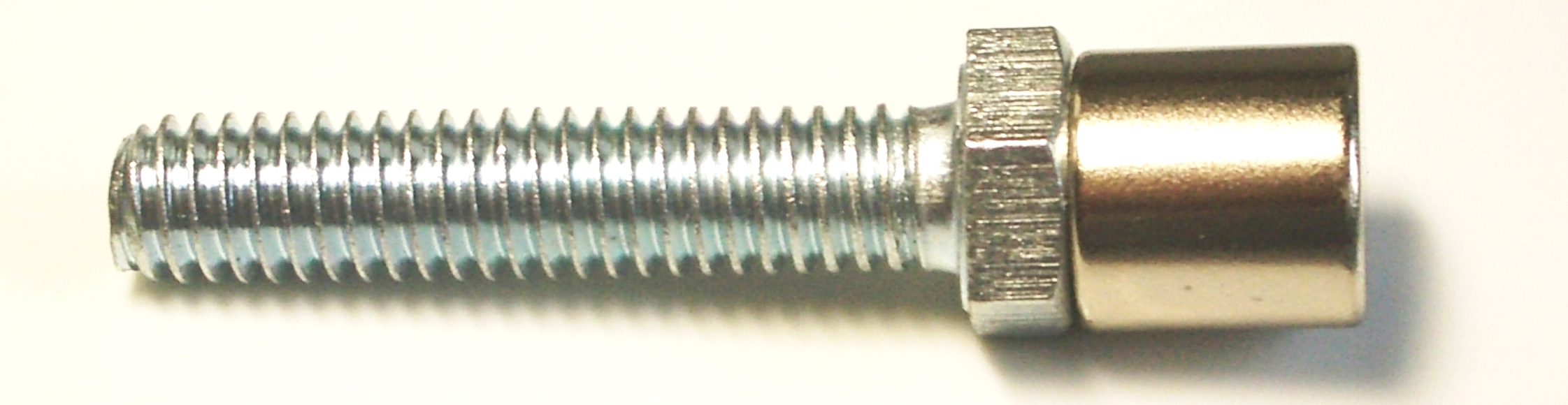
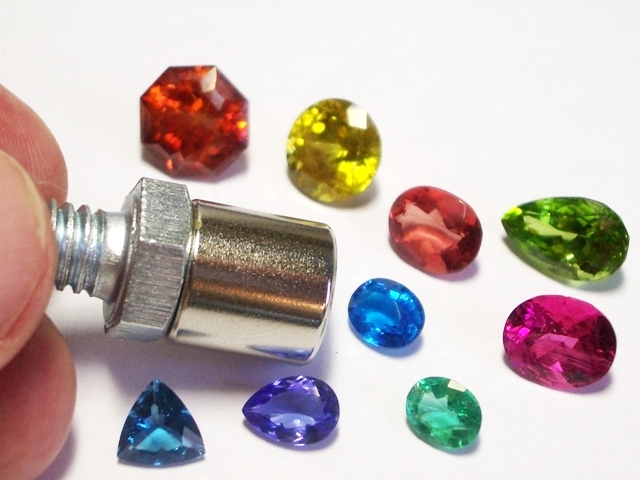
A simple magnetic wand made from a strong neodymium magnet is one of the most useful, effective and enjoyable tools we have for basic gem identification, yet it is also one of the least known tools. Because every type of gem shows a characteristic range of responses to a neodymium magnet, we can use such magnetic responses to help us identify gems. A magnetic wand is an extremely sensitive instrument that can detect very slight magnetism. Wands are small and portable, and simple to use. Unlike many other gemology tools, neodymium magnets are accessible to everyone, and magnetic wands can be easily assembled for just a few dollars.
Video Clip:
Magnetism in Gemstones
How is it Useful?
The Forgotten Tool
The Website
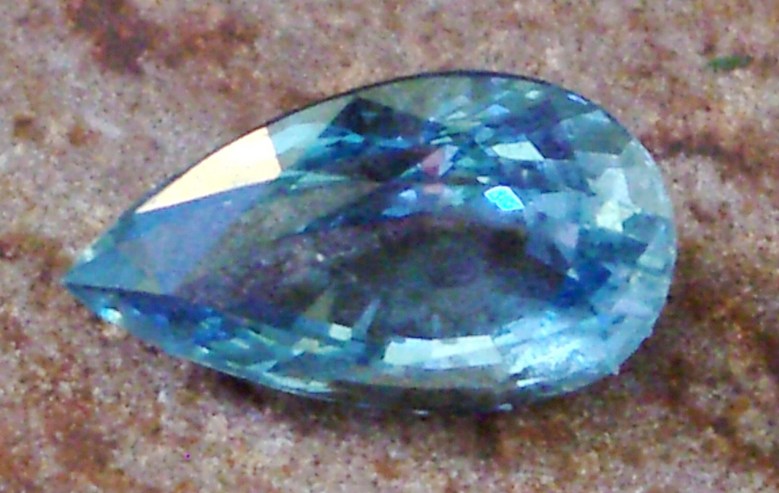
Aquamarine is Weakly to Moderately Attracted to a Magnet
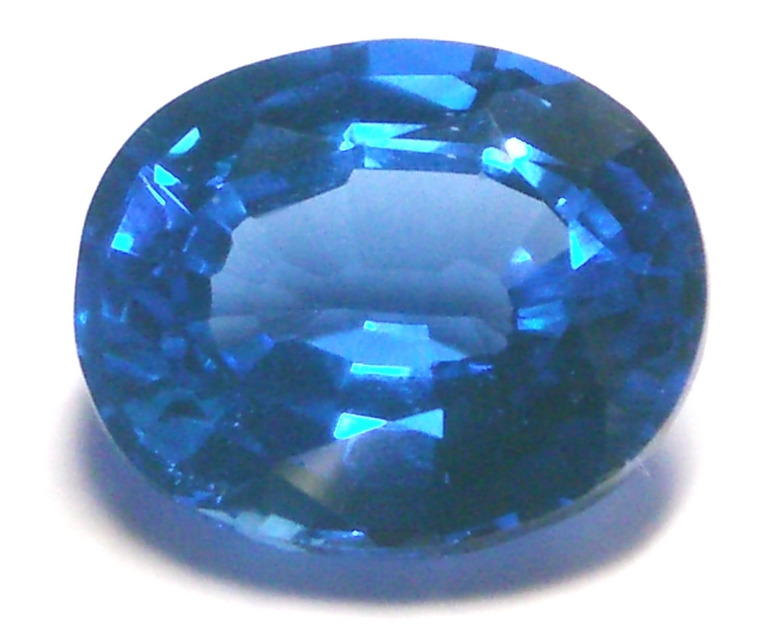
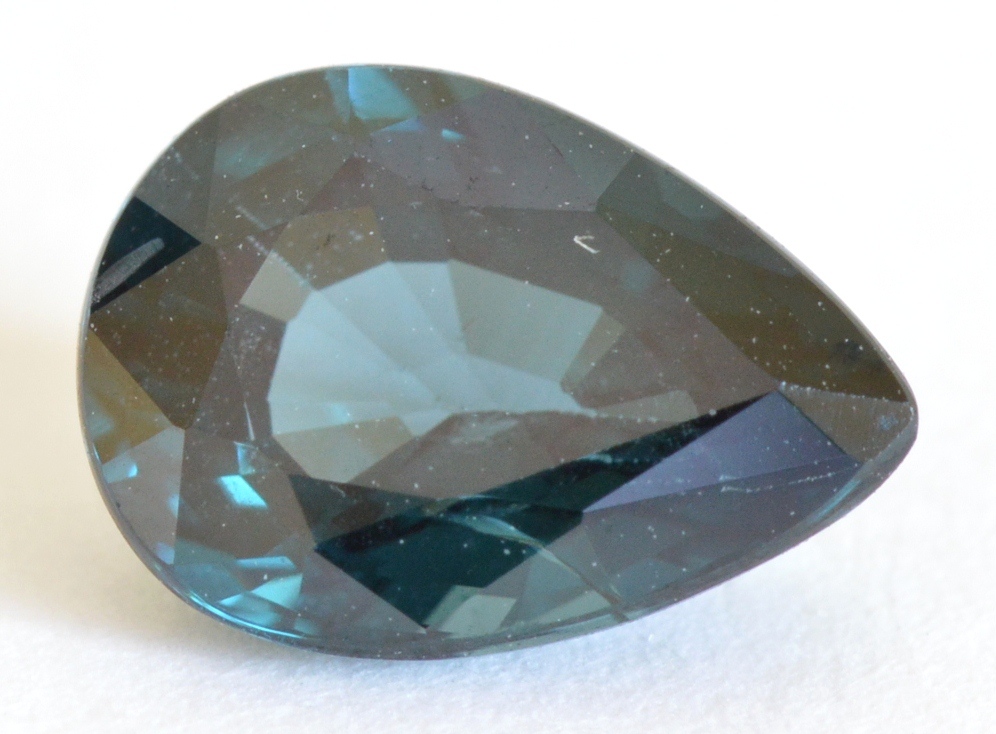
Natural Blue Spinel
Shows Magnetic Attraction
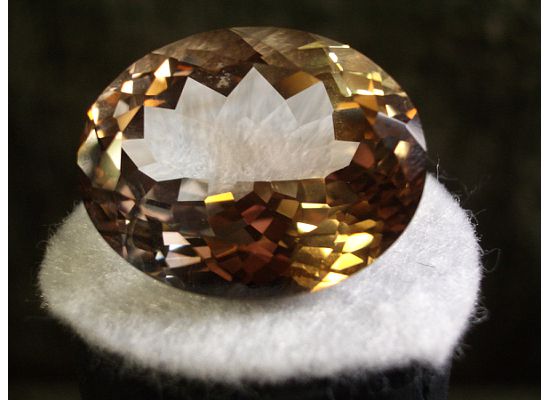
Topaz of Any Color
is Not Attracted to a Magnet
Synthetic Blue Spinel is Not Attracted to a Magnet
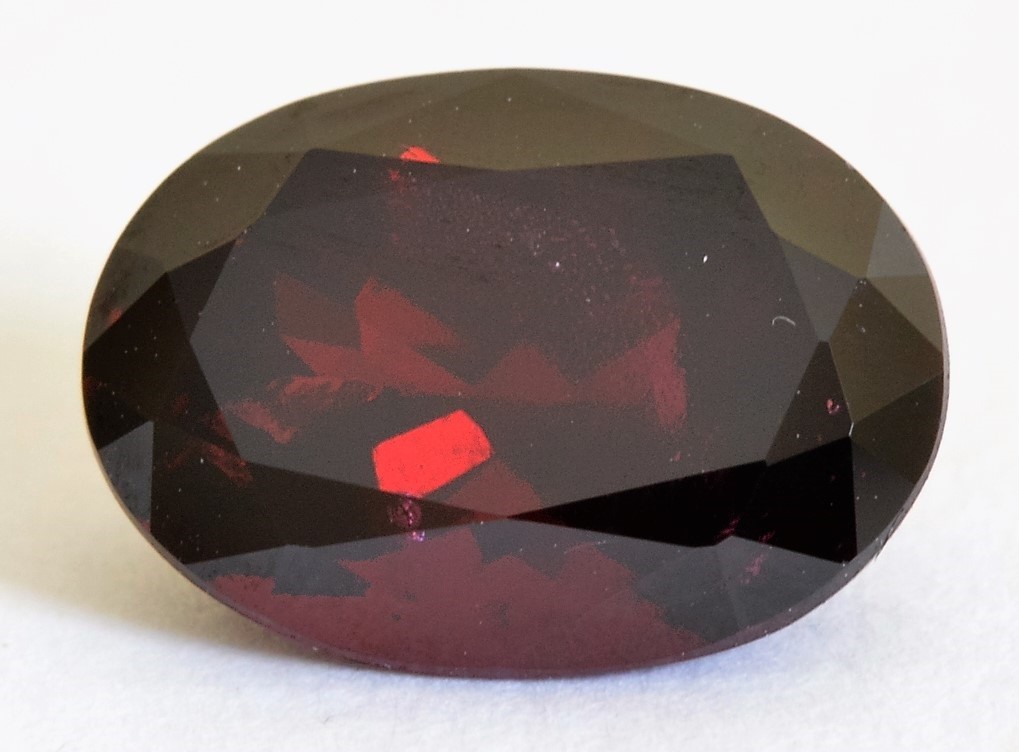
Among its multiple uses, a magnetic wand provides a quick means for identifying Garnet. Most common Garnets pick up. Differences in magnetic response can also be used to distinguish some natural gems from synthetics and imitations. For example, natural blue Spinel can in most cases be distinguished from synthetic blue Spinel, and natural Diamond can often be separated from lab-created Diamond. A magnet can be used to separate many types of gems that look alike, such as Aquamarine from blue Topaz, or Chrome Tourmaline from all other green Tourmalines. And magnetic testing can serve as an important method to corroborate the test results of your other gemology tools. Many more uses are presented on the page titled 10 Practical Uses for Gem Identification.
Magnetism in Gemstones
An Effective Tool and Method for Gem Identification
© Kirk Feral 2009-present
Like hardness or density, magnetism is a physical property that can be measured in rocks and minerals, and magnetic properties have long been studied by geologists and mineralogists. Since the development of the Hoover Balance in 2007, precise measurements of magnetism in cut gemstones can now also be taken. Many gemstone characterizations determined by more costly analytical instruments and methods can also be achieved by simple magnetic testing. However, magnetism remains an unexplored and neglected frontier in gemology. Researchers and influential gemological institutions such as GIA (Gemological Institution of America) have not studied magnetism, nor have they publicly endorsed or acknowledged the practical applications of the magnetic wand and the Hoover Balance. It is astonishing that very little information about gem magnetism can be found outside this website.
The simple method of testing with a magnetic wand is missing from the curriculum of gemology classes taught by gemology institutes, universities and gem societies. The advantages of magnetic testing for gemologists are rarely mentioned in books, journals or online resources. And aside from our own Magnetic Susceptibility Index, listings of the magnetic properties of gemstones remain absent from all compendiums and indexes of gems, with the notable exceptions of Gemology Tools Professional and the Handbook of Gemmology.
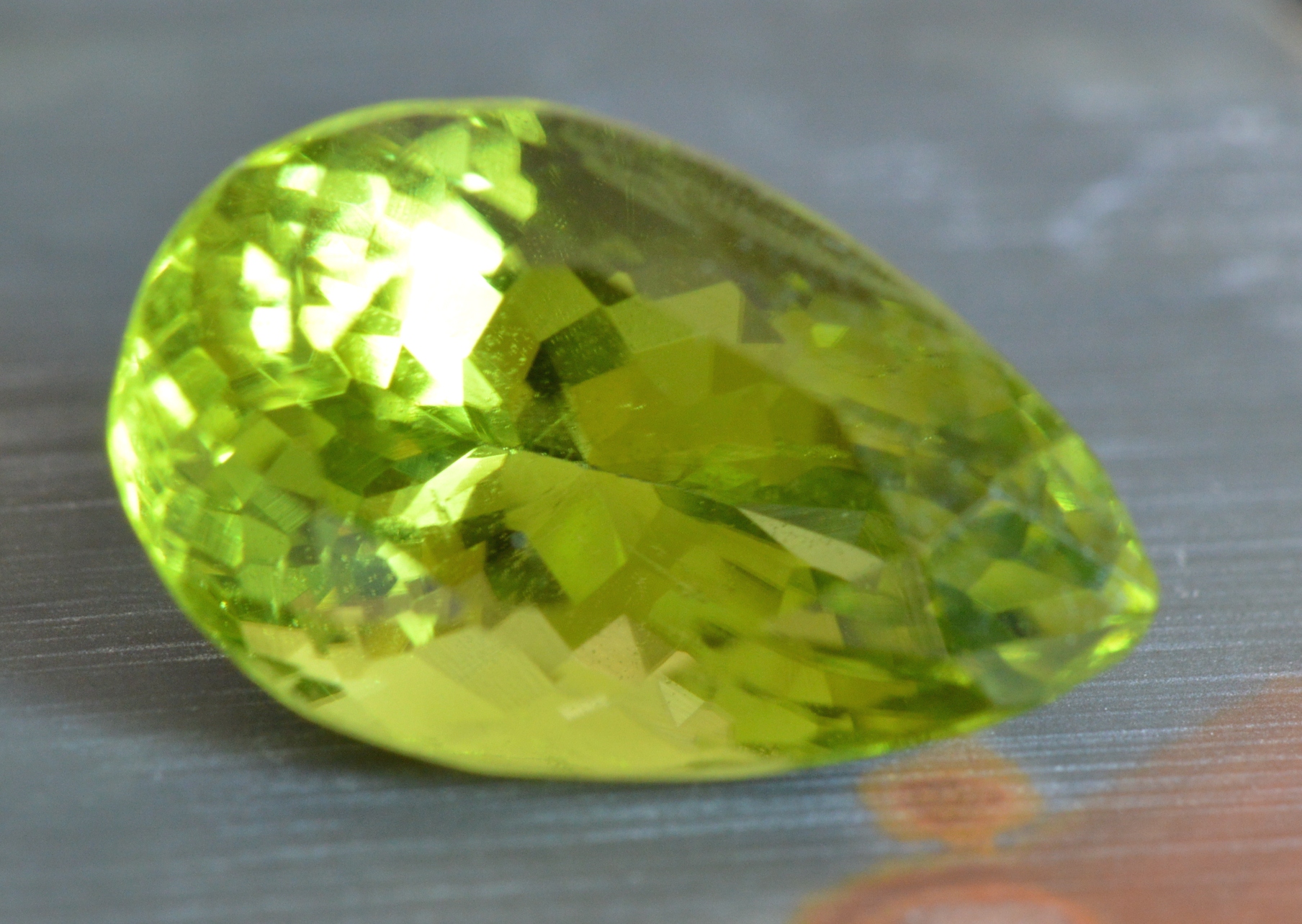
Peridot is Dragged
by a Magnet
Almandine Garnet
is Picked Up by a Magnet
How is it Useful?